

Rainwater Harvesting
- Since its incpetion, Agency for Barani Areas Development (ABAD), has been providing the services for development of rainwater harvesting structures. These sturctures consist of Mini Dams, Water Ponds, Water Conveyance System, Lift Irrigation Schemes, Roof Top Harvesting, Water Storage Tank, Dug Wells/Sump Wells/Shallow Tube Wells & Turbines
- The Mini Dam constructued for rainwater harvesting has the storage capacity of more than 40 AFT to 100 AFT
- The life of these structures is usually 20-30 years (depending upon the proper care given by the beneficiary farmers)
- More than 3000 structures (mini dams/ponds) have been established by ABAD so far by providing Government subsidy to the farmers
- Feasibility Study Survey of Mini Dam (FSMD) Cell has been working since 1982 and has been providing the technical services for construction of rain water harvesting structures
Command Area Development
- ABAD has worked for the Command Area Development in Barani Region through establishment of orchards, provision of fodder, promotion of forestry, Agricuture Extension Services through various multi-sectoral development programmes
- These development activities enabled the farmers to improve their income
- Farmers are provided these services on government subsidies
- Construction of water conservation systems have helped in development of command are and promotion of agricultural activities
Catchment Area Treatment
- Catchment area refers to the area from which rainfall flows into water reservoir. protection and treatment of catchment area is important to ensure smooth flow of water and water supply in the water reservoir throughout the year
- For effective utilization of harvested water, efficient working of catchment are is pertinent
- ABAD through various development schemes has provided catchment/treatment works in the upper catchment are of the water reservoirs
- More than 10,000 structures including retaining walls, spillways, earthen bund, wireneting spur, check dams, gully plugging, erosion control bund etc. constructed over subsidized development schemes
- Thousands of acres of eroded land has been recalimed with the catchment area tratment activities and converted into agriable fertile land
 |
 |
 |
 |
Capacity Building
- ABAD from time to time has worked on the capacity bulding of the farmers in the Punjab Barani Tract
- Farmers of Punjab Barani Tract were provided training on new agriculture techniques/practices and allied facilities
- Traditional to modern ways of agricutlure farming were initiated through department's support sturcture
Farmers
- The development projects of ABAD are implemented with participatory approach/cost sharing basis on pre-defined ratio. Farmers are required to share a minimal ratio of the total cost
- The interventions are executed by the farmers /community groups under overall supervision of ABAD/line departments
- The core thrust of ABAD's activities revolve around the welfare, capacity building, economic development & social uplift of the farmers of Punjab's Barani Tract
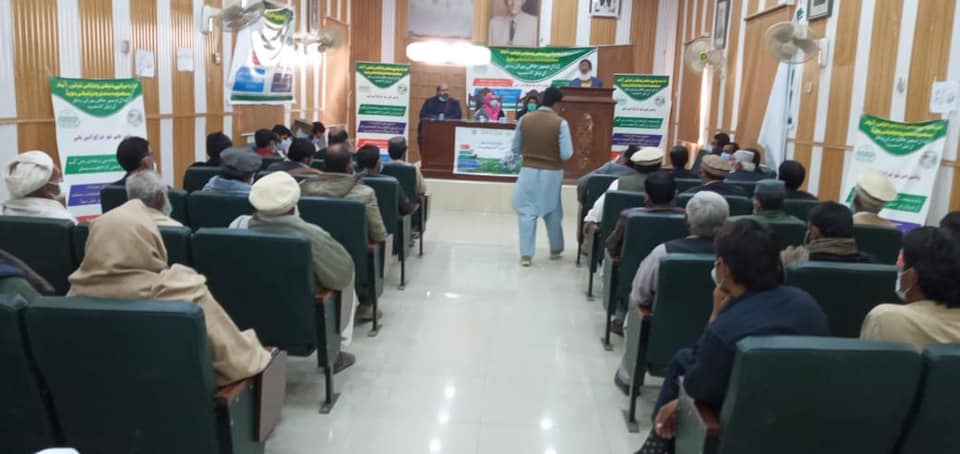
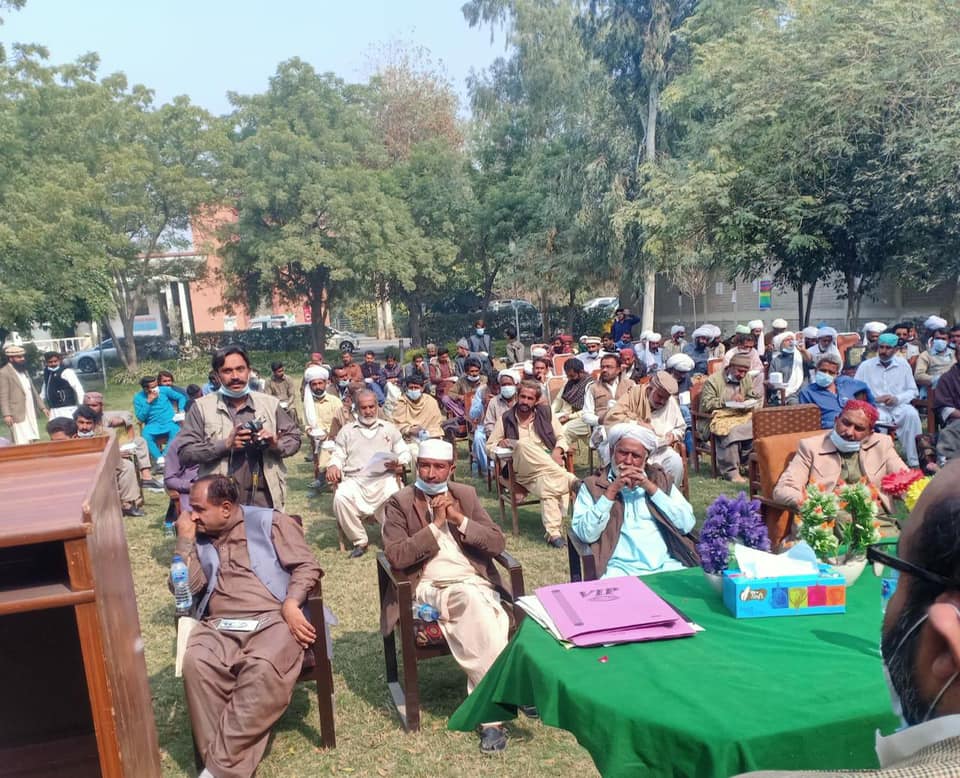
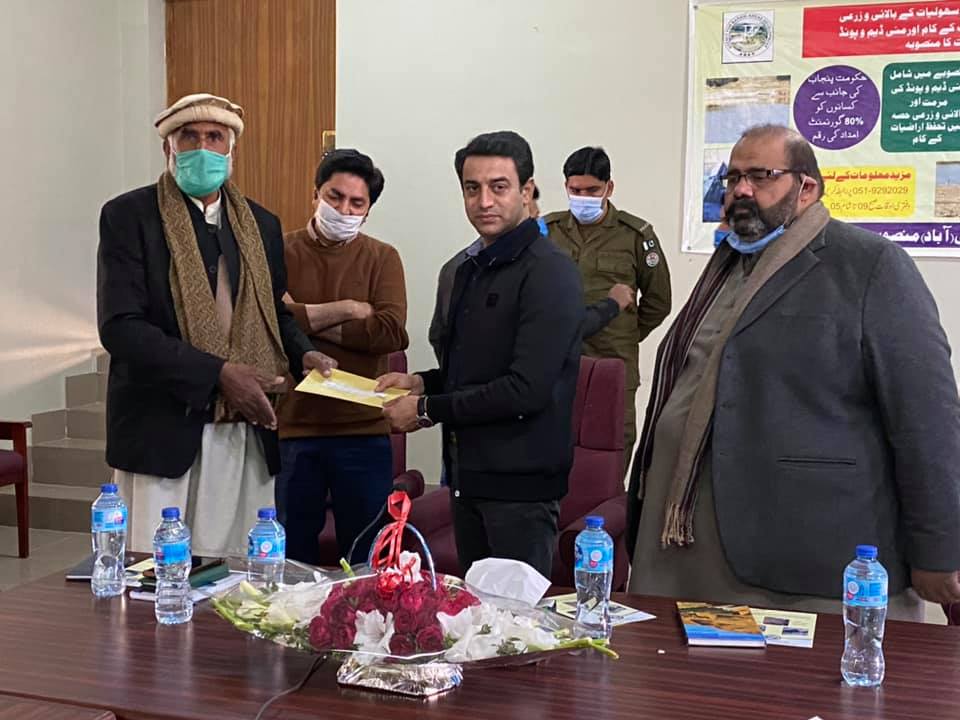
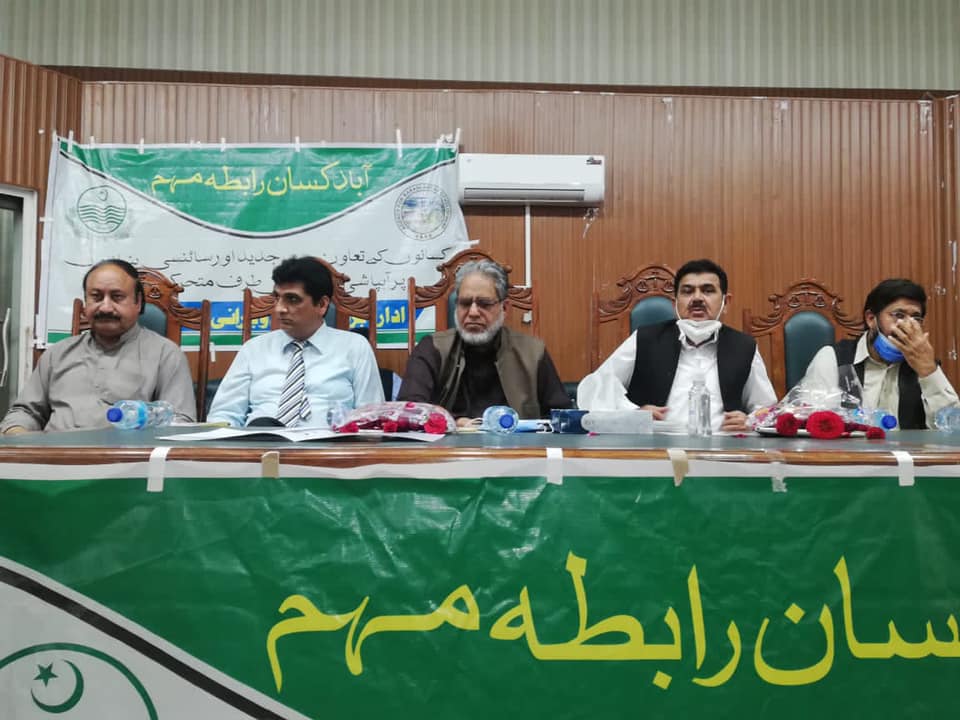
- ABAD from time to time conducts farmer workshops and farmer days to connect with the farmers of Punjab Barani Tract and inform them of services available
 |
 |
 |
 |
Research Work
ABAD implemented development projects have been evaluated by third parties. The Third Parties claimed that the ABAD's intervention impact is cost effective, efficient, greater adoptability and sustenance. ABAD supports the researchers regarding provision of Data of farmers, research studies.
A report submitted by National Rural Support Program (NRSP) showcases in detail the impact of development projects executed by ABAD over the period of time.
Human Capital Development
ABAD has played a pivotal role for the uplift of human capital of Punjab Barani Tract in the fields of:
- Technical Trade Centers
- Establishment of 29 Women Technical Training Centers (Currently under TEVTA)
- Technical Trade Trainings for women & men
- Establishment of small scale enterpreneure
Poverty Alleviation
The prime objective of the development schemes carried out by ABAD remains the poverty alleviation in Punjab Barani Tract and will remain so untill grading out of poverty is done.
Impact Assessment Report of Barani Village Development Project
Barani Village Development Project (BVDP), (1999 - 2007) a mega multi-sectoral project was carried out in 06 Tehsils of Rawalpindi Division in collaboration with IFAD. Salient features of the project completion report, submitted by IFAD, are as under:
- Poverty, which was 45.47% in 1999 reduced to 29.48% by the end of the project
- The project brought more than 3900 acres of land under cultivation
- The production of wheat and maize increased @ 76% and 60% with around 11000 tons of net increase due to irrigation schemes
- Soil conservation measures increased 21 to 31 % of wheat and maize production
- Human access to water increased by 4% and that of livestock increased by11%
- Trainings imparted to women resulted in around US$ 24 to US$ 105 per annum increase in their income
- Trainings imparted to men resulted in around US$ 17 to US$ 70 per annum increase in their income
Livelihood Improvement
ABAD has been working for the development of Punjab Barani Tract since 1978. ABAD has played a vital role in changing the living standards of the rural farmers by providing subsidized interventions at large scale. Agriculture development, provision of livestock, water resource development, skills development, promotion of fish farming are few among many services provided by ABAD.
Alternate Energy Resource Development
ABAD has established 205 Solar Powered Water Systems in Potohar Region. The component reduced the operational cost upto the extent of zero.
Solar Powered Water Pumping System
ABAD is currently in the process of implementing a total of 330 solar-powered water pumping systems. These systems are divided into two categories: 165 community-based systems and 165 individual-based systems. In the community-based approach, groups of farmers, ranging from three to seven individuals, collectively apply for the installation of a solar pump. On the other hand, individual farmers who have applied for intervention will receive solar pumps in the individual-based approach. This initiative spans across following districts of punjab barani tract, includes Rawalpindi, Attock, Jhelum, Chakwal, Khushab, Layyah, and Bhakkar.