
Overview
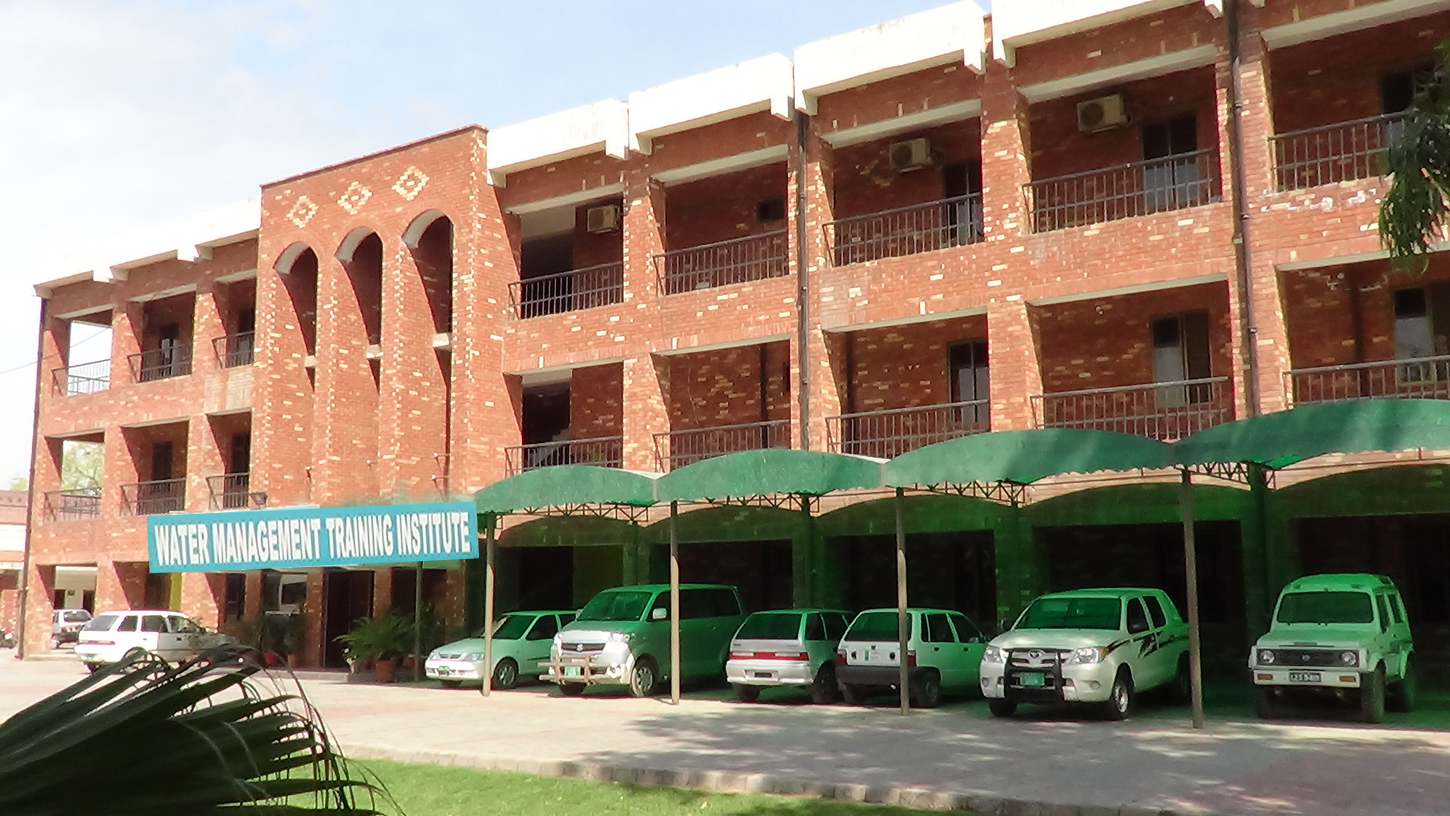
The Water Management Training Institute (WMTI) was established in 1980 under the Water Management Wing of the Agriculture Department. Its primary objective was to enhance efficiencies in irrigation water conveyance and application at the tertiary irrigation level. Key points about WMTI include:
- It was established to introduce and improve water management technology in the region.
- WMTI is the only training facility in the country exclusively dedicated to water management.
- The institute offers training programs of varying durations to a wide range of participants, including project staff, personnel from other departments, water users associations, and farmers.
- Over 81,000 individuals have received training at WMTI since its inception.
- Initially, the institute conducted research activities alongside training, focusing on technical criteria in farm-level irrigation.
- After the establishment of the Directorate of Water Management Training in 1981, the research component was discontinued, and the institute's focus shifted solely to training.
- WMTI aims to enhance capacity and improve the quality of training and research in water management.
- Key areas of focus include high-efficiency irrigation technologies, resource conservation, and social mobilization.
- The institute recognizes the importance of research in water management and is working towards reviving and strengthening the research component.
- By doing so, WMTI aims to develop innovative and sustainable solutions for water management challenges.
- The institute plays a crucial role in promoting efficient water management practices and contributing to capacity building and knowledge dissemination in the field.
In conclusion, the Water Management Training Institute has been instrumental in introducing and improving water management practices in the region. Through its training programs and, in the past, research activities, it has contributed to the development of expertise and knowledge in water management. By enhancing its training and research capabilities, WMTI aims to address current and future challenges in water management and ensure the sustainable use of water resources in agriculture.
Functions
The Water Management Training Institute plays a crucial role in various aspects of water management. Here are the major responsibilities and functions of the institute:
- Formulating and conducting comprehensive prioritized training plans: The institute designs and implements training programs for all stakeholders involved in water management activities, ensuring that their training needs are identified and addressed effectively.
- Developing updated training modules: The institute continuously develops and updates training modules to ensure that the training programs align with the latest advancements and practices in water management. These modules serve as valuable resources for conducting effective training sessions.
- Preparing applied water management research recommendations: The institute conducts research and provides recommendations to address technological challenges and issues related to water management in the Punjab region. This research focuses on practical solutions that can be implemented to improve water management practices.
- Supporting and implementing training components of OFWM Projects: The institute plays a supportive role in various projects related to the On-Farm Water Management (OFWM) initiative. It assists in designing and delivering training components of these projects, ensuring that the participants acquire the necessary knowledge and skills.
- Developing human resources for enhancing water productivity: One of the institute's key objectives is to develop human resources capable of maximizing water productivity, promoting the efficient use of water resources, and achieving the goal of producing more crops per drop of water.
- Training personnel in project planning, implementation, monitoring, and evaluation: The institute provides training to personnel from OFWM and other organizations involved in land and water management. This training covers project planning, implementation, monitoring, and evaluation, equipping individuals with the necessary skills for successful project execution.
- Farmers' training for cooperative institution management: The institute conducts training programs for farmers to enhance their ability to professionally organize and manage viable and sustainable cooperative institutions. These programs also focus on educating farmers about effective irrigation water management practices.
- Conducting field research in water management technology: The institute conducts research in water management technologies that can be practically implemented at the farm level. This research aims to develop innovative and efficient approaches to water management and conservation.
- Generating employment in water management-related disciplines: The institute contributes to employment generation by offering training programs and courses in water management-related disciplines. This helps create opportunities for farmers and technicians to work in the field of water management.
- Enhancing capacity of the private sector in water management: The institute focuses on strengthening the capacity of the private sector to undertake water management enterprises. This includes providing training, resources, and support to private sector entities involved in water management activities.
- Providing support services in testing and quality control: The institute offers support services in testing and quality control for the latest OFWM interventions, such as high-efficiency irrigation systems. This ensures that the implemented interventions meet the required standards and deliver optimal results.
- Developing and maintaining spatial databases: The institute utilizes Geographic Information Systems (GIS) and integrated mapping systems to develop and maintain spatial databases. These databases provide valuable information and insights for effective water management planning and decision-making.
- Setting up and operating web-based services: The institute establishes and manages web-based services related to OFWM. These online platforms serve as a hub for sharing information, resources, and updates on water management practices, training programs, and research findings.
Maintaining linkages and collaborations with national and international institutions: The institute actively engages in establishing and maintaining linkages, collaborations, and joint ventures with national and international training and research institutions. This fosters knowledge exchange, sharing of best practices, and collective efforts to address water management challenges on a broader scale.
Courses Offered
The Water Management Training Institute (WMTI) focuses on capacity building for all stakeholders involved in On Farm Water Management activities. The institute offers training activities divided into three categories: Professional Courses, Technical Courses, and Refresher Courses. These courses aim to enhance the skills and knowledge of staff and farmers in water management practices. Additionally, WMTI provides exposure opportunities for individuals from various backgrounds to learn and observe High-Efficiency Irrigation Systems (HEIS) technologies and practices.
In addition to these regular training programs, WMTI is also responsible for conducting mandatory trainings as prescribed in the service rules. These mandatory training courses ensure compliance with regulations and professional standards. While the specific list of such training courses may vary, they typically cover a wide range of topics relevant to water management, agricultural practices, and sustainable irrigation techniques.
Overall, WMTI plays a crucial role in building the capacity of stakeholders, promoting skill development, and ensuring adherence to regulations and best practices in On Farm Water Management activities.
- Training of Trainers
- Training of Faculty (one week)
- Professional Courses
- Technical Courses
These technical courses offered by WMTI provide participants with specialized knowledge and practical skills in specific areas of water management and agricultural practices. They contribute to building the capacity of stakeholders involved in On Farm Water Management activities and promote the adoption of efficient and sustainable techniques.
Refresher Courses
These refresher courses offered by WMTI serve as valuable opportunities for professionals and practitioners to update their knowledge, refresh their skills, and stay informed about the latest developments in their respective fields. They ensure that stakeholders involved in On Farm Water Management activities are equipped with up-to-date expertise and can contribute effectively to sustainable water management practices.
Mandatory Training Courrses prescribed in the service rules:
- Six weeks training of officers for promotion:
- Four weeks training of officers/officials for promotion:
Stakeholders
Collaborations and Partnerships
The stakeholders of the Water Management Training Institute encompass a wide range of groups. This includes the on-farm water management professional staff who are responsible for delivering training programs and expertise. Allied government departments related to agriculture, irrigation, and livestock also play a significant role. The private sector, consisting of companies and organizations involved in agriculture and water management, contributes resources and expertise. Additionally, stakeholders include farmers and Water Users Associations (WUAs) members who directly benefit from the institute's training programs. Lastly, the institute collaborates with the Ministry of Agriculture, Irrigation & Livestock (MAIL) in Afghanistan, fostering international partnerships for knowledge sharing and capacity building in water management.
Stakeholders of the Water Management Training Institute (WMTI) can be categorized into several groups:
-
OFWM Staff
- Administrative and Supervisory Officers
- Field Officers (Engineers, Agronomists, etc.)
- Clerical Staff
- Tractor Operators
- Field Assistants
-
Allied Government Departments and Provinces
- Agriculture Extension
- Provincial On-Farm Water Management
- N.G.O's
- Universities
- Research Institutions
- Forestry
- Veterinary Departments
-
Farmers and Private Sector
- Water Users Associations (WUAs) Members
- Kissan Board Members
- Village Council Members
- General Public from Rural Areas
-
International
- On Farm Water Management, Ministry of Agriculture, Irrigation & Livestock (MAIL), Afghanistan
Collaborations of WMTI include partnerships with various national and international training and research institutions, such as:
- Water Management Research Centre, University of Agriculture, Faisalabad
- Agricultural Training Institutes, Rawalpindi, Sargodha, and Rahimyar Khan
- Regional Agricultural and Economic Development Center, Vehari
- Ayub Agricultural Research Institute, Faisalabad
- Pakistan Agricultural Research Board, Lahore
- Pakistan Agricultural Research Council, Islamabad
- Space and Upper Atmosphere Research Commission, Karachi
- Soil Fertility Institute, Lahore
- Centre for Excellence in Water Resources, UET, Lahore
- Management and Professional Development Department, Lahore
- National and Punjab Rural Support Programs
- Pakistan Council for Renewable Energy Technology, Islamabad
- Alternate Energy Development Board
- International Water Management Institute, Lahore
- Rice-Wheat Consortium, PARC, Islamabad
- National Engineering Services Pakistan (Pvt.) Limited, Lahore
- Department of Agricultural Engineering, Bahauddin Zakria University, Multan
- Ministry of Agriculture, Irrigation & Livestock, Kabul, Afghanistan
- Japan International Cooperation Agency (JICA)
Please note that the above list is not exhaustive and there may be additional stakeholders and collaborations involved with the Water Management Training Institute.
Facilities
The specialized training offered by the institute includes:
- Agricultural Engineering
- Agronomy
- Soil Science
- Agricultural Economics
- Rural Sociology
- Project Planning & Evaluation
- Irrigation Agronomy
- Environmental Safeguards
- Agricultural Extension
The faculty members are qualified and multi-disciplinary, covering various domains such as:
- Design Engineer
- Surveying and mapping
- Flow Measurement
- Materials and Construction
- Lift Irrigation
- Pumps & Tube wells
- Quality Control & Testing
- Monitoring & Evaluation
- Safeguards Specialists
- LASER land Leveling Operation
- Maintenance and Repair
- Permanent Raised Beds
- HEIS Design Installation and O&M
- Solar Energy water Pumping Systems
The institute maintains a database of over 100 visiting experts for specialized trainings. Infrastructure facilities at the institute include:
- Lecture halls equipped with audio-visual equipment and multimedia capabilities
- Computer lab with high-speed broadband internet connections
- 75-acre Training and Research Farm at Renala Khurd, district Okara
- Library with the latest manuals, technical and training materials
- Air-conditioned accommodation for up to 30 participants
- Mess and recreational facilities
- Transportation facility for field visits and on-site demonstrations
- 100 KVA electric generator with backup of another 25 KVA generator
- Flat panel electric visual displays in hostel rooms
- Tuck-shop, photocopying, printing (B/W and color), scanning services
- Hot & cold water, laundry services
- Display Center for showcasing relevant materials and technologies.
- Aimed at equipping trainers with the necessary skills to effectively deliver training programs.
- Focuses on instructional techniques, facilitation skills, and training program development.
- Enhances trainers' abilities to transfer knowledge and engage participants.
- Designed to enhance the teaching capabilities of faculty members.
- Covers pedagogical methods, curriculum development, and assessment strategies.
- Equips faculty with innovative teaching techniques and encourages interactive learning approaches.
- Drip/Sprinkler Design (three weeks):
- Focuses on the principles and practices of designing efficient drip and sprinkler irrigation systems.
- Covers topics such as system components, hydraulics, layout design, and maintenance.
- Equips participants with the skills to design and optimize water distribution systems for agricultural applications.
- Farm Planning & Design (two weeks):
- Provides knowledge and tools for effective farm planning and design.
- Covers aspects such as land evaluation, crop selection, layout design, and infrastructure planning.
- Enables participants to create well-organized and sustainable farm systems.
- Irrigation Scheduling (two weeks):
- Addresses the importance of efficient irrigation scheduling techniques.
- Covers concepts such as crop water requirements, soil moisture monitoring, and irrigation timing.
- Equips participants with the skills to develop irrigation schedules that maximize water use efficiency and crop productivity.
- Administrative Procedures (three days):
- Covers the essential administrative procedures and protocols relevant to water management activities.
- Focuses on documentation, record-keeping, reporting, and compliance requirements.
- Helps participants understand the administrative aspects of water management projects and ensure smooth operations.
- Accounts & Finance (three days):
- Provides an overview of accounting and financial management principles specific to water management projects.
- Covers topics such as budgeting, financial analysis, and fund management.
- Equips participants with the necessary knowledge to effectively manage financial aspects within the context of water management activities.
- Basic Computer Operation (two weeks):
- Introduces participants to the fundamentals of computer operation and software applications.
- Covers topics such as file management, word processing, spreadsheet usage, and internet navigation.
- Aims to enhance participants' computer literacy, enabling them to effectively utilize technology for water management tasks.
- ift Irrigation System Design (three days):
- Focuses on the design principles and practices of lift irrigation systems.
- Covers aspects such as pump selection, pipeline design, and energy optimization.
- Equips participants with the skills to design efficient and reliable lift irrigation systems.
- LASER Tractor Operation (one week):
- Provides hands-on training on operating LASER-guided tractors for precision land leveling.
- Covers topics such as tractor operation techniques, LASER equipment calibration, and safety measures.
- Enables participants to effectively use LASER technology for accurate land leveling.
- LASER Equipment Maintenance (one week):
- Focuses on the maintenance and troubleshooting of LASER equipment used in land leveling.
- Covers topics such as equipment calibration, troubleshooting common issues, and preventive maintenance.
- Equips participants with the skills to ensure the proper functioning and longevity of LASER equipment.
- Resource Conservation Technologies (one week):
- Explores various technologies and practices for conserving water and optimizing resource use.
- Covers topics such as micro-irrigation systems, rainwater harvesting, and soil moisture conservation techniques.
- Aims to educate participants on sustainable approaches to water management and resource conservation.
- Watercourse Designing (three days):
- Focuses on the principles and techniques of designing efficient watercourses for irrigation purposes.
- Covers topics such as alignment, cross-section design, and slope calculations.
- Updates participants on the latest advancements and best practices in watercourse design.
- Watercourse Construction (three days):
- Provides hands-on training on the construction of watercourses.
- Covers topics such as excavation techniques, lining materials, and quality control.
- Equips participants with the necessary skills to ensure proper construction and maintenance of watercourses.
- Surveying and Leveling (three days):
- Focuses on surveying and leveling techniques for accurate land and water management.
- Covers topics such as using surveying instruments, establishing benchmarks, and contour mapping.
- Refreshes participants' knowledge and skills in surveying and leveling practices.
- Flow Measurement (three days):
- Covers various methods and instruments used for measuring water flow in irrigation systems.
- Includes topics such as weirs, flumes, flow meters, and data interpretation.
- Updates participants on the latest flow measurement techniques and equipment.
- Social Mobilization (three days):
- Focuses on strategies and approaches for mobilizing and engaging communities in water management activities.
- Covers topics such as stakeholder analysis, community participation, and awareness campaigns.
- Equips participants with skills in effectively involving communities and promoting social inclusiveness in water management projects.
- BS-18+SP to BS-19:
- Designed to prepare officers for higher-level responsibilities and leadership roles.
- Covers advanced topics related to their field of expertise, management, and decision-making.
- Enhances their knowledge and skills to perform effectively at the BS-19 level.
- BS18 to BS-18+SP:
- Provides specialized training to officers being promoted to BS-18+SP (Special Pay Scale).
- Focuses on enhancing their expertise in specific areas relevant to their job responsibilities.
- Equips them with the necessary skills and knowledge to excel at the higher scale.
- BS-17 to BS-18:
- Aims to prepare officers for higher-level managerial positions and greater responsibilities.
- Covers topics such as policy formulation, strategic planning, and administrative functions.
- Enhances their leadership abilities and prepares them for the BS-18 level.
- BS-15 to BS-17:
- Focuses on developing the managerial and leadership skills required at the BS-17 level.
Training Material
Training material refers to any resources or materials used for educating and training individuals in a particular subject or skill. It typically includes written materials, presentations, videos, interactive exercises, and other resources designed to convey information and facilitate learning.
In the context of farm water management, training material could consist of:
- Handbooks or manuals: Comprehensive guides that cover various aspects of farm water management, including irrigation techniques, water conservation practices, monitoring and measurement methods, and sustainable farming strategies.
- Presentations and slideshows: Visual presentations that provide an overview of farm water management principles, techniques, and case studies. These can be used in workshops, training sessions, or online courses to present information organized and engagingly.
- Videos and webinars: Recorded videos or live webinars demonstrating farm water management practices, showcasing successful case studies, and providing step-by-step guidance on implementing water-saving techniques. These resources can be valuable for visual learners and allow participants to observe practical examples.
- Worksheets and exercises: Interactive materials allowing individuals to apply their knowledge and skills in farm water management. These could include worksheets with calculation exercises, quizzes to test understanding, or interactive simulations that simulate real-world scenarios.
- Case studies and success stories: Real-life examples of farmers or agricultural operations that have successfully implemented farm water management strategies. These case studies can provide inspiration, practical insights, and lessons learned for participants undergoing training.
- Online resources and tools: Access to online platforms, websites, or software that provide additional information, calculators, or decision support tools related to farm water management. These resources can be accessed by trainees for further exploration and learning.
- Practical demonstrations and field visits: Hands-on experiences that allow trainees to witness farm water management techniques in action. These could include field visits to farms implementing advanced irrigation systems or participating in practical workshops where trainees learn how to install and maintain irrigation equipment.
The aim of training material is to provide comprehensive and accessible resources that equip individuals with the knowledge, skills, and tools necessary for effective farm water management. It should be structured, engaging, and tailored to the audience’s specific needs, whether they are farmers, agricultural extension workers, or students studying agriculture.
The provided training material is below and covers a range of topics related to watercourse improvements, flow measurements, surveying, and the adoption of modern irrigation practices. The material includes a design equation and cross-sections for watercourse enhancements, which aid in optimizing water flow. It also encompasses a manual on surveying techniques specific to watercourse improvements. In addition, the training material emphasizes the importance of promoting and adopting modern irrigation practices through strategic studies, technical assistance, and training sessions. These resources collectively aim to enhance water management and irrigation efficiency in agricultural systems
- Design Equations & X-Sections for Watercourse Improvement
- Flow Measurements
- Manual on Surveying for Watercourse Improvement
- Adoption And Promotion of Modern Irrigation Technology Practices, Strategic Studies, Technical Assistance and Training