

Brief
Agriculture is among the main forces behind Pakistan's economic growth. Since it uses over 91% of the water supplies that are available, it is primarily reliant on water. Water scarcity, declining water productivity, and inefficient irrigation practices pose serious challenges to sustainable agricultural production, particularly in arid and semi-arid regions. Climate change–induced variability in rainfall, rising temperatures, and increasing competition for water further exacerbate the pressure on limited water resources. Traditional flood irrigation methods dominate farming systems, leading to excessive water losses through evaporation, seepage, and runoff. For farms to properly use water, a valuable natural resource, water management is a crucial issue that requires concentrated attention. Water development, conservation, and utilization are essential to the nation's economy because they improve agricultural output, which provides almost 80% of the nation's food needs. For irrigated agriculture, the nation's water supplies are finite and steadily depleting. Due to the rapidly expanding population, rising needs for a variety of applications brought on by the ongoing development in people's quality of life, and growing industry demands, it will soon become a scarce resource for agricultural productivity under irrigated agriculture. The primary obstacles to low water productivity from highly productive agricultural areas are poor irrigation efficiency, over/under irrigation, and insufficient water availability for crop production in the face of numerous new problems to irrigated agriculture, such as food security and climate change. The fact that around half of water is lost during conveyance, application, and agricultural cultivation is concerning. As a result, crop yields per acre and per cubic meter of water are significantly below international standards and even below those of nearby nations. However, thorough investigation and an understanding of the underlying mechanisms are urgently needed.
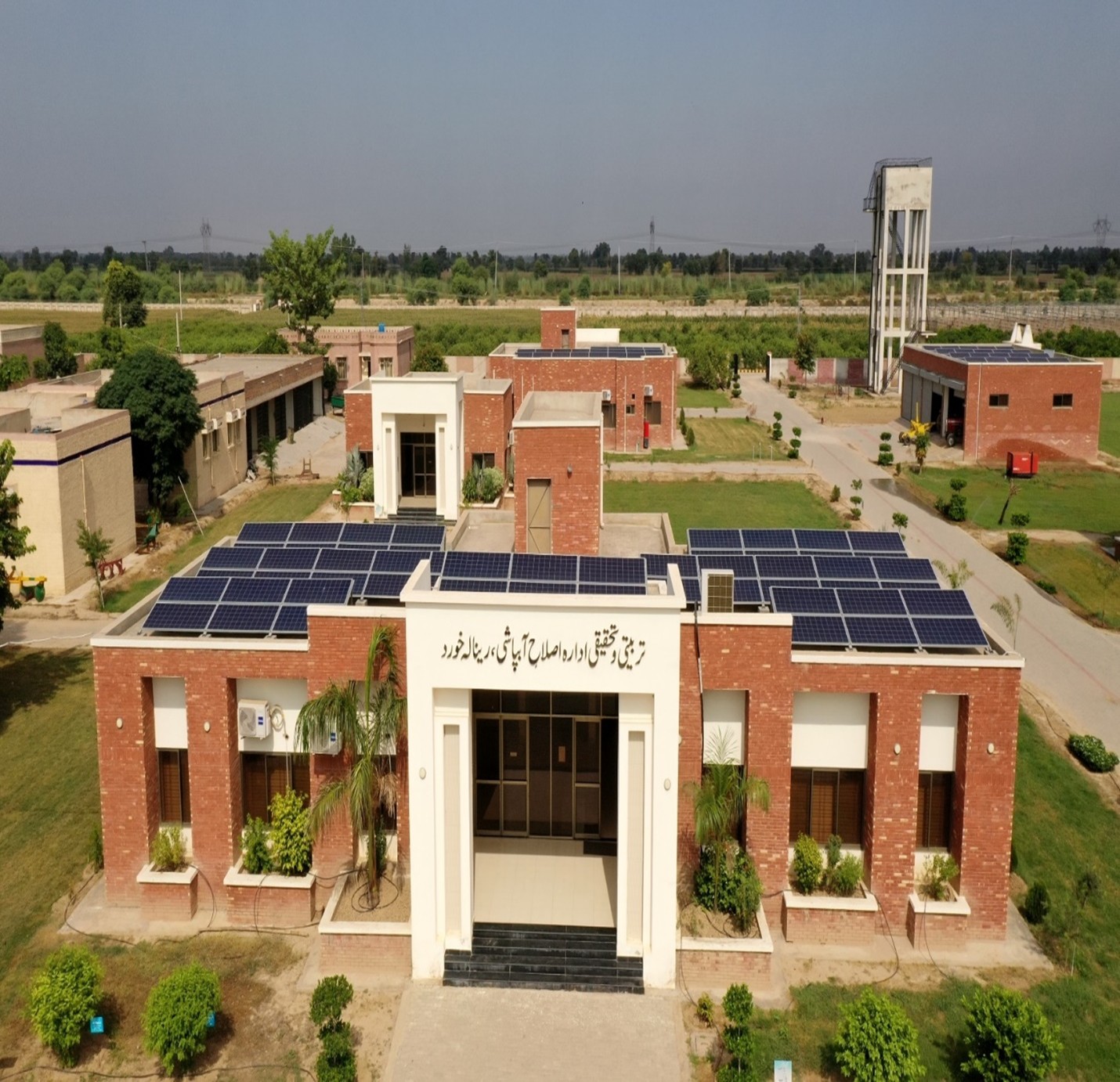
In order to address the significant problems of ineffective irrigation techniques, stagnant water productivity, and the increased expense of contemporary water management technologies, the Water Management Research Farm (WMRF), located in Renala Khurd, Okara, was founded in 2009-10 for the purpose of conducting research and demonstrating contemporary water management interventions. Major infrastructure has been developed under the World Bank assisted project “Punjab Irrigated-Agriculture Productivity Improvement Project” since 2014. At WMRF, the effectiveness of soil moisture measurement devices is also being assessed in order to provide irrigation water at the appropriate time based on crop water requirements. At WMRF, stakeholders are periodically given hands-on training to ensure the smooth adoption of new processes and technology. The farm encompasses training facilities and accommodation facilities for 25-30 trainees and two lecture halls for about 25 participants each.
MISSION “More Crop Per Drop”
 |
Objectives
- Pilot testing/ indigenization of new water management technologies/ techniques
- Applied research for resolution of issues faced by the farmers in adoption of OFWM interventions
- Demonstration of modern/ improved on-farm water management technologies/ practices
- Practical training of farmers and OFWM field staff
- Collaboration with national and international research institutions
Facilities
|
Facilities Available for Water Saving And Community Awareness |
|
Drip Irrigation systemsDrip irrigation systems are used to apply water directly to the plant root zone in small, controlled amounts, improving water efficiency and crop performance. Their main uses include: efficient water use: Minimizes water losses due to evaporation, runoff, and deep percolation compared to flood or sprinkler irrigation. It allows precise control of timing and quantity of water according to crop water requirements. Improving crop yield and quality. It maintains optimal soil moisture, reducing plant stress and enhancing growth. It enables application of fertilizers through irrigation water, improving nutrient use efficiency. It has 90% irrigation efficiency. |
 |
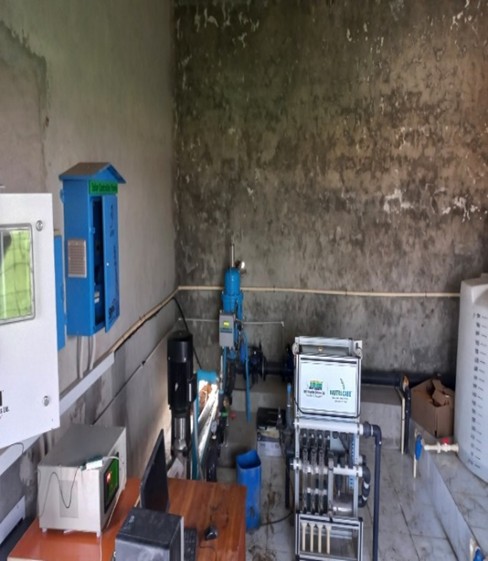
Automated Drip Irrigation SystemAn automatic drip irrigation system is an advanced irrigation method that delivers water to crops automatically based on time, soil moisture, or crop water demand, without the need for manual operation. It Supplies the exact amount of water needed by plants at the right time. It reduces water wastage through evaporation, runoff, and over-irrigation. It eliminates manual opening and closing of valves. Maintains optimum soil moisture in the root zone. Allows automatic application of fertilizers through the system. It adapts irrigation to weather and soil conditions |
 |
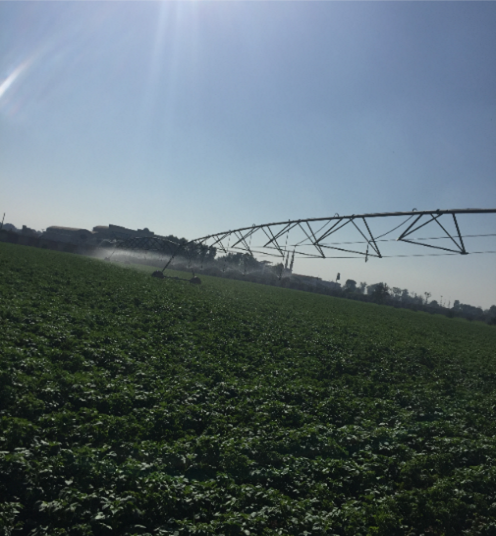
Central Pivot (CP) Irrigation SystemIt is a mechanized method of irrigation in which water is applied to crops through a rotating sprinkler system that moves in a circular pattern around a fixed central point. It consists of Pivot Point, Span Towers, Sprinklers/Nozzles, Drive System, Control Panel, End Gun, Water is pumped from a source (well, canal, or reservoir) to the central pivot. It flows through the pipeline mounted on towers |
 |
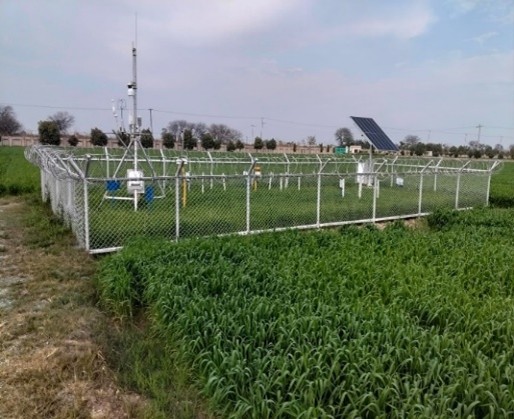
Eddy Covariance Flux Tower systemIt is a scientific method used to measure the exchange (flux) of gases, energy, and water between the land surface and the atmosphere. It is widely used in agriculture, forestry, climate research, and hydrology. It calculates actual evaporation which is very useful for irrigation scheduling and to calculate quantity of water to be applied. |
 |
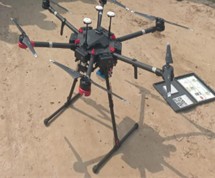
Drone (For Measuring Crop Health and Crop Nutrition)Agricultural drones are unmanned aerial systems equipped with specialized sensors and imaging technology that allow farmers to monitor crop health, apply inputs with precision, and collect field data for data-driven decision-making. These platforms improve farming efficiency by identifying issues at early stage, reducing input costs, and optimizing resource management across agricultural operations. |
 |
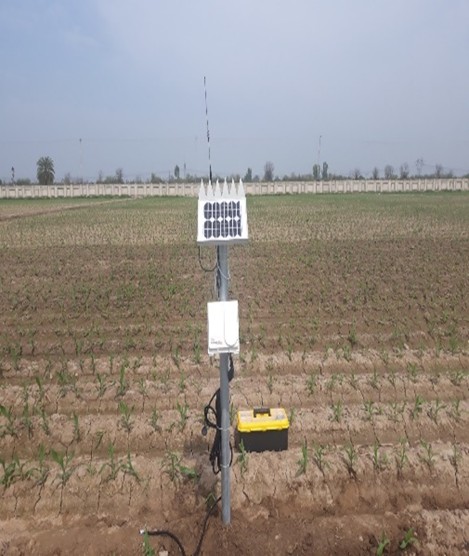
EnviroSCANIt is used for continuously monitoring water, temperature and salinity levels at various depths within a soil profile. EnviroSCAN probe has proven instrumental in achieving water savings of 30-50% and significant improvements in crop yield and quality. What sets the EnviroSCAN probe apart from other options on the market is that it is the only commercially available product that can monitor soil properties at considerable depths, up to 40 meters, with the convenience of a single profiling probe. Horizontal, fully buried installation of probes is also possible. |
 |
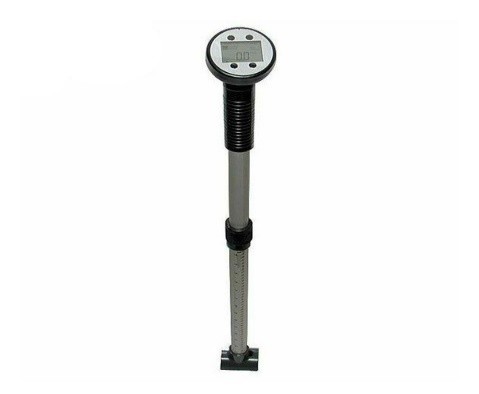
Velocity Probe MeterIt is consists of a protected water turbo prop positive displacement sensor coupled with an expandable probe handle ending in a digital readout display. |
 |
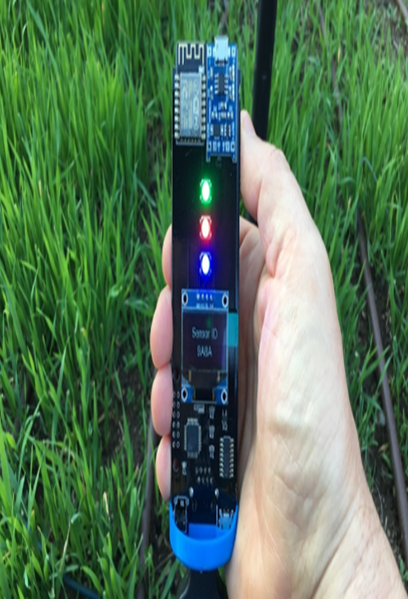
Chameleon Wi-Fi ReaderThe Chameleon Wi-Fi Reader is the tool at the core of the VIA’s advanced-level system. It uses colour LED’s to provide the farmer with the information required to make a decision e.g. How dry is the soil now?. It saves sensor data in the reader and transfer this data to the VIA cloud via Wi-Fi for wider and longer-term benefits. The reader measures a sensor array comprised of three Chameleon Soil Water Sensors and one temperature and ID sensor. The three soil water sensors are typically buried at different depths in the field (eg. 20, 40 and 60cm). The temperature sensor is recommended to be buried at the middle level for temperature compensation of the soil moisture readings. |
 |
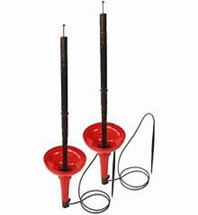
Wetting Front DetectorThe FullStop™ Wetting Front Detector shows how deep-water infiltrates into the soil after irrigation or rain. It takes a soil water sample so that the movement of plant nutrients and salt through the soil can be monitored. It is used to find out if you are irrigating too little or too much, to assist in the management of fertilizer and salt and show if the soil is water-logged. It is comprised of a probe from where sample of nitrates can be taken for fertilizer contents analysis. |
 |
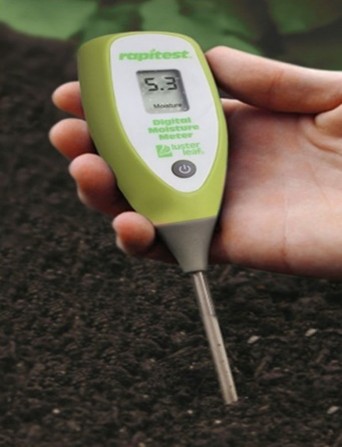
Handy Soil Moisture MeterA handy soil moisture meter is a portable instrument used to quickly measure the moisture content of soil in the field. It provides real-time information on soil water status, which helps in making timely and accurate irrigation decisions. The meter is used by inserting its probe vertically into the soil to the desired root-zone depth, ensuring good contact between the sensor and the soil. After insertion, the moisture reading is displayed either on a digital screen or an analog scale, depending on the model. Measurements should be taken at multiple locations within a field to account for soil variability. |
 |
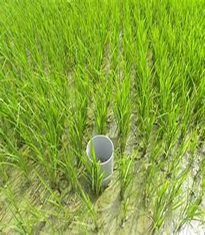
Alternate Wetting and Drying (AWD) gadgetIt is a managed irrigation technique by which irrigation is done according to the level of water in a pipe segment, called AWD pipe, locally pronounced as pani pipe. Instead of continuous flooding. fields are allowed to dry intermittently before re-irrigation. Maintain a shallow standing water or a dry period based on soil/field indicators. It is used in rice farming to reduce water use without affecting yield. The duration of the non-flooded period varies (1 to 10+ days) based on soil type, weather, and crop stage. After irrigation, when the water level drops ̴15 cm below the soil surface, re-flood the field up to 5-7 cm depth. It can save irrigation water up to 30%. |
|
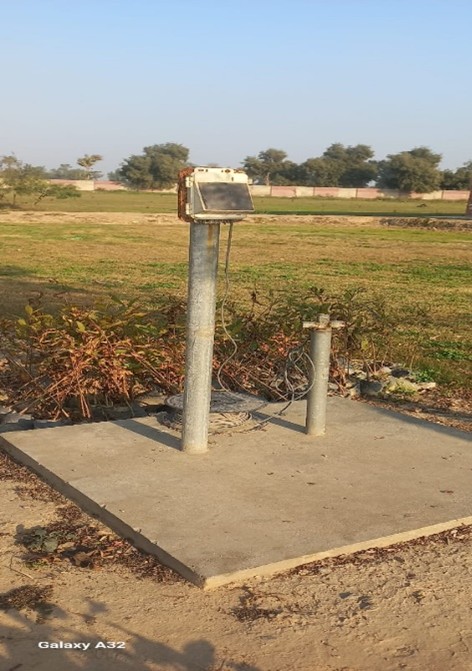
Conductivity, Temperature and Depth driver (CTD)It provides real-time information about ground water depth, temperature and ground water salinity. It consists of Conductivity Sensor which measures electrical conductivity of water, Temperature Sensor that measures water temperature accurately, Pressure Sensor which calculates depth from water pressure Data Logger which stores measurements. |
|
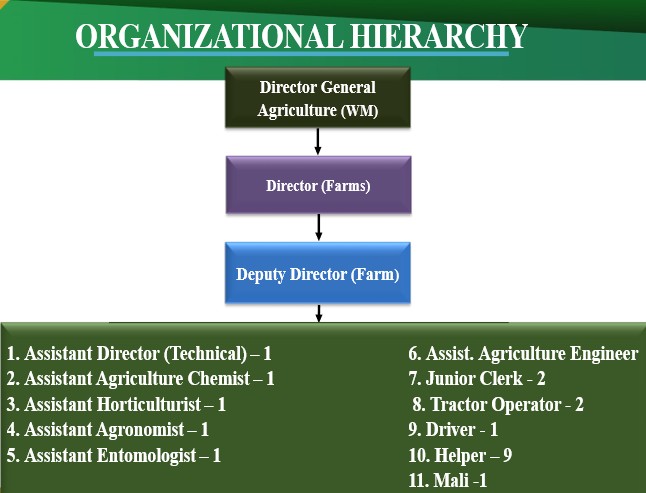
Organizational Hierarchy
WMRF Achievements
- 25 Research Studies completed
- 20 Research Papers published in well reputed journals
- (other publications include 6 review articles and 1 book chapter)
- 9 Collaborations with National Research Institutes/ Universities
- 40 Awareness Creation and Demonstration Sessions
- 5,300 Farmers Trained
- 21 Million Farm Income (last 2 years)
Research Publications
|
Internships completed for research under the supervision of Director Farms, WMRF
|
Sr. No |
Discipline |
Parent Institute |
No. of Students |
Concerned officer |
|
1 |
Entomology |
UAF-Constituent College, Depalpur, Okara |
12 |
Dr. Habib ur Rehman |
|
2 |
Plant Pathology |
UAF-Constituent College, Depalpur, Okara |
02 |
|
|
3 |
Soil Science |
UAF-Constituent College, Depalpur, Okara |
09 |
Dr. H. M. Bilal |
|
4 |
Environmental Sciences |
University of Okara |
02 |
|
|
5 |
Chemistry |
University of Engineering and Technology (UET), Lahore |
01 |
|
|
6 |
Agronomy |
UAF-Constituent College, Depalpur, Okara |
02 |
|
|
7 |
Horticulture |
UAF-Constituent College, Depalpur, Okara |
11 |
Dr. Mujahid Ali |
|
8 |
Agronomy |
UAF-Constituent College, Depalpur, Okara |
04 |
|
|
9 |
Soil Sciences |
UAF-Constituent College, Depalpur, Okara |
06 |
Engr. Mohammad Mohsan (DD, Farm) |
|
10 |
Agronomy |
UAF-Constituent College, Depalpur, Okara |
01 |
|
|
11 |
Agri-Engineering &Technology |
UAF-Main Campus, FSD |
02 |
Research of Ph. D. and M. Sc. (Hons) students under the Supervision of Director Farms, WMRF
|
Degree |
Discipline |
Institute |
No. of Students |
Concerned officer |
|
M.Sc. (Hons.) Agriculture |
Entomology |
University of Agriculture, Faisalabad |
04 |
Dr. Habib ur Rehman
|
|
Ph. D. |
Punjab University, Lahore, |
01 |
Farm income target achieved
|
Fiscal Year |
Target Proposed |
Target Achieved |
|
2017-18 |
3000000 |
3090000 |
|
2018-19 |
3500000 |
4730000 |
|
2019-20 |
3700000 |
5410000 |
|
2020-21 |
5000000 |
6500000 |
|
2021-22 |
5000000 |
6900000 |
|
2022-23 |
10311250 |
11573997 |
|
2023-24 |
10541250 |
10542103 |
|
2024-25 |
9159300 |
10190105 |
|
2025-26 |
10306000 |
6419885 (up to Dec, 2025) |
Research collaborations
- International Water Management Institute (IWMI)
- Asian Development Bank (ADB)
- Punjab Seed Corporation, Sahiwal
- Lahore University of Management Sciences (LUMS)
- Fauji Fresh n Freeze Limited
- University of Agriculture, Faisalabad and Depalpur, Campus
- University of Okara, Okara
- Punjab Agriculture Research Board (PARB)
- National University of Science and Technology (NUST)
On-going research trails for 2025-26 at WMRF (Kharif)
- Improving Crop Water Productivity of Cotton under Different Source-Sink relationship and Irrigation Methods
- Green House Gases (GHG) Emission measurement and Alternate Wetting and Drying (AWD) in Rice-Wheat Cropping System of Punjab, Pakistan (In collaboration with ADB and UAF)
- Optimization of depletion level under Alternate Wetting and Drying (AWD) Rice in loamy soil condition of Punjab, Pakistan
- Farm Precision Irrigation and Sustainable Water Management at well-drained loamy soil for Rice Crop (in collaboration with Ph. D. scholars of The Polytechnic University of Milan, Italy)
- Enhancing Water Use Efficiency of Paddy under Innovative Sowing Practices and Different Irrigation Methods (in collaboration with Ph. D. scholars of The Polytechnic University of Milan, Italy)
On-going research trails for 2025-26 at WMRF (Rabi)
- Evaluating the Performance of Bed-Planted Wheat with Single and Double Laterals in Drip Irrigation System in arable soil
- Optimization of Cut-Off Value for Basin Irrigation for Enhancing Water Productivity of Wheat in Loamy Soil
- Influence of Bed-Width on Agronomic Performance and Water Use Efficiency of Wheat in Loamy Soil
- Transitioning from Food irrigation to Drip irrigation system in Potato for improvement of Crop yield and Water productivity
- Transitioning from Flood irrigation to Center Pivot irrigation system in potato for improvement of crop yield and water productivity
- Farm Precision Irrigation and Sustainable Water Management at arable soil for Wheat Crop (in collaboration with Ph. D. scholars of The Polytechnic University of Milan, Italy)
- Comparison of Water Productivity of Guava under Drip and Flood Irrigation under heading-back
- Comparison of irrigation scheduling based on soil moisture gadget and evapotranspiration (ET) from Literature with conventional irrigation method for evaluation of Crop Water Productivity (in collaboration with Ph. D. scholars of The Polytechnic University of Milan, Italy)
Projects completed
Digital Technological Solutions for Promotion of Precision Agriculture
- Intervention of digital automation technology in irrigation system as compared to traditional furrow irrigation practices
- To digitalize technological solutions for precision agriculture through sensors by precise application of inputs
- Development of digital mobile application for community services in agriculture
Components of PARB Project
- A manual gated pipe irrigation system
- Automated gated pipe
- Automated Naka for diversion of water
- Calibration of mobile application for agriculture advisory services
Water Productivity Enhancement through Regenerative Climate smart Agriculture (WP-RCA) (Pilot Project)
- ADP funded project
- Total cost Rs 51.9 million
- Project Duration 2022-23 to 2024-25
Major components/ activities
- Pilot Testing and Demonstration of Automated Systems for Water Accounting & Budgeting and Irrigation Scheduling
- Demonstrate and Pilot Test of Precision Agriculture Machinery
- Training and Capacity Building on Regenerative Agriculture, Precision Agriculture, Remote Sensing/ GIS and Climate Smart Interventions/ Technologies.
Pilot Testing of Innovative Technologies to Improve Water Use Efficiency
Developed 18 TTCs at 9 Tehsils attached with LBD Canal system with:
- (EnviroSCAN, Soil testing Kits, Moisture meter, Digital flow meter, Flume, Pipe Nakka)
- Farming community near TTCs were trained to use soil moisture sensors
- Border Designs were developed/improved
- Improved Water productivity by using soil moisture gadgets, which has great impact on the farming community for poverty alleviation.
- Farmers can irrigate fields according to the needs of the crop by using mobile phones as the EnviroSCAN is connected by mobile data
Contact Us
Directorate of Farms,
Address: Water Management Research Farm, (WMRF), Renala Khurd, Okara, Pakistan
Email: researchfarmrenala@gmail.com
Phone: +92-333-8960403